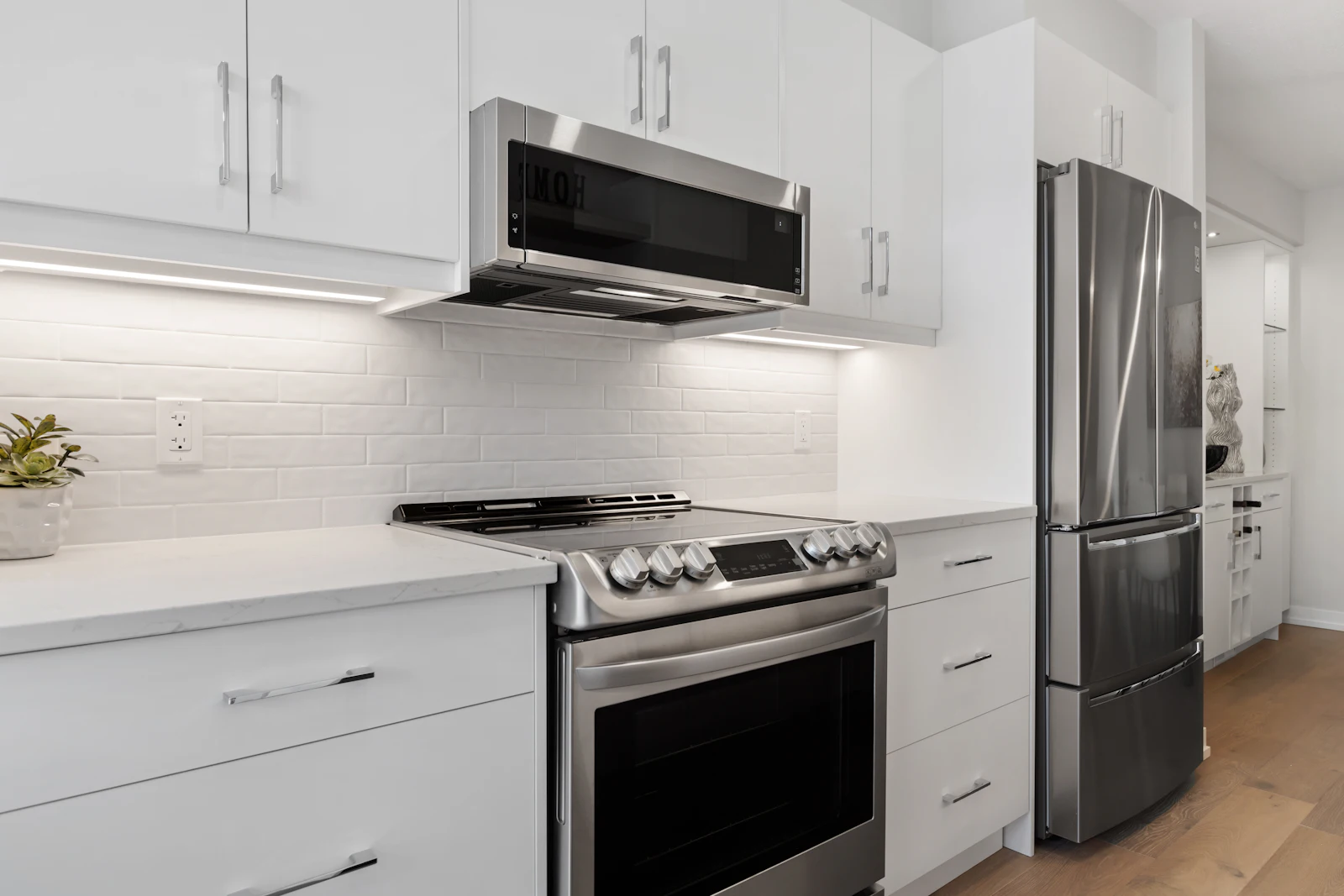
Cooktop burner dead or flashing? The checks differ on gas, electric and induction. See what to try first, including the magnet test for induction pans.
A cooktop that will not heat can have a very different cause depending on its type. Start by checking the breaker or fuse, and whether a control lock is switched on. Then follow the checks for your type below.
Induction: check the pan first
Induction only heats magnetic cookware. GE Appliances says (opens in a new tab) a pan that is not magnetic or is too small will not allow the burner to turn on, and the power level may flash. Hold a magnet to the bottom of the pan. Whirlpool's guide (opens in a new tab) says that if the magnet sticks, the pan can be used for induction.
- Center the pan inside the circle marked on the glass.
- Use a flat pan that makes full contact with the surface.
- Measure the flat magnetic area of the base, since it can be smaller than the pan itself.
- Try a different pan you know works. If that pan heats, the cooktop is fine.
Electric: one element or all of them
If one coil fails, swap it with a coil of the same size when the cooktop is cold, if yours plugs in. If the fault moves with the coil, the coil is bad. If it stays at the same spot, the problem is likely the receptacle or the switch. On smooth glass tops the elements are not meant to be swapped, so note which zone fails and what the display shows.
Gas: moisture and blocked ports
Most gas cooktop problems begin with a spill or a wet burner. Our guide to burners that click or will not light walks through a safe cleaning.
Stop and call
Stop using a glass cooktop that is cracked, and turn it off at the breaker. Call if the breaker keeps tripping, an element stays on at every setting, or the problem remains after these checks. See our cooktop repair page for more faults. We repair cooktops at homes in Montgomery County and Howard County.