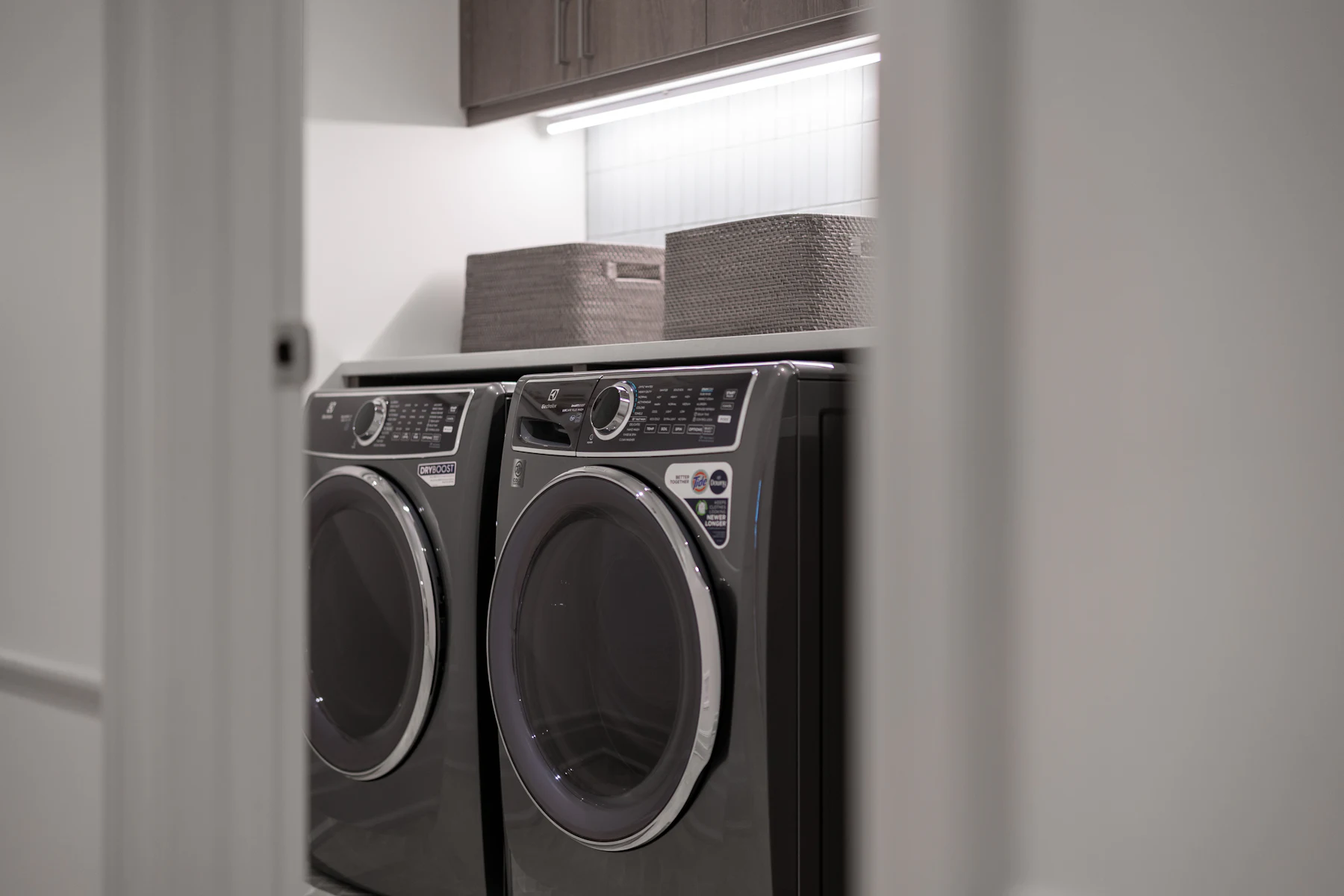
Water stuck in your washer? Check the hose, the pump filter and the standpipe first. Here is how to drain it safely and when to call for a repair.
A washer that will not drain usually has a clogged pump filter, a kinked or blocked drain hose, or a failed drain pump. It can also be a house drain problem. Check the simple things before assuming the machine has failed.
Before you start
Unplug the washer. Turn off the two water valves. Keep towels and a shallow pan ready, because even a small filter can release a lot of water.
Step through the likely causes
- Look behind the machine for a kinked or crushed drain hose.
- On a front loader, open the small lower panel, drain the short hose into a pan if yours has one, then slowly unscrew the pump filter. Coins, hair ties and socks are common finds.
- On a top loader, listen during the drain. A hum with no water moving can point to a jammed or failed pump.
- Check whether the hose has been pushed too far down the standpipe, or whether a lint trap on the hose end is clogged.
Could it be the house drain?
If water backs up out of the standpipe, or the nearby sink and tub are also slow, the clog may be in the house plumbing. That is a job for a plumber. Using too much detergent can also make suds push up the standpipe, so try less detergent and see if it stops.
When to call
Call if the filter and hose are clear and the washer still will not drain, or if an error code keeps coming back. Note the code and the model number first. It is usually under the lid on top loaders, and inside the door frame on front loaders. Our washer repair page lists more faults and causes. If your home has hard or well water, slow filling may have a different cause. We work at homes across Montgomery County and Howard County.